
Dental Bridges – Midland, TX
A Seamless Solution for Consecutive Smile Gaps

If you have one or more smile gaps that are in a consecutive row, you don’t necessarily need a partial denture. Dr. Philipps or Dr. Ramos can instead replace your missing teeth with a seamless, tooth-colored dental bridge. After treatment, you’ll be able to enjoy a full smile and restored oral function. Contact our office to schedule your appointment today, or keep reading to learn more.
Why Choose Dr. Laura Philipps, DMD for Dental Bridges?
- Dentist With Over 20 Years of Experience
- CareCredit Financing Makes Treatment Affordable
- Personalized, Patient-Focused Care
What Is a Dental Bridge?
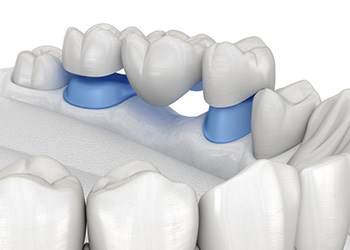
A dental bridge has two different parts. A set of “pontics” will replace your missing teeth as you might expect, but we’ll also fuse a dental crown on both ends of the restoration. The crowns will fit over the natural teeth on either side of your smile gap, effectively serving as supporting anchors for the pontics. Rest assured, both parts will be customized to suit your grin and blend in with your other pearly whites.
Types of Dental Bridges

Technically, there are two main types of dental bridges. One has been used for centuries, while the other is more modern. Here’s an overview of the differences:
Traditional Dental Bridges
This bridge is exactly like what was described above. Sort of like dentures, it will rest on top of your two natural teeth and gums – though we’ll also secure it in place with a special dental cement.
Implant Bridges
As the name implies, an implant bridge combines “old-fashioned” pontics with dental implants. The crowns on either end of your restoration will be attached to titanium implant posts that are placed below the gumline, providing superior support and strength.
The Benefits of Getting a Dental Bridge

A dental bridge can benefit you in many ways, including:
- Preventing dental drift by filling in your smile gap
- Giving your grin a perfectly natural look
- Making chewing easier
- Providing a long-lasting solution
Dental Bridges FAQs
What Are Dental Bridges Made Of?
Dental bridges can be made out of a variety of materials, but our office uses high-quality porcelain. Porcelain is known to look and feel incredibly tooth-like, and is just as durable as other options. Not only will your new restoration look perfectly seamless once fitted to your smile, but it will also hold up under chewing pressure and last you for years to come!
Is Getting a Dental Bridge Painful?
Fortunately, getting a dental bridge isn’t very painful. Most patients find that a local anesthetic is enough to help them feel comfortable throughout the entire appointment.
That said, we recognize that not everyone experiences pain in the same way. If you’re anxious about your dental bridge placement or have a history of sensitivity, we’d be happy to help you arrange for dental sedation. Both nitrous oxide and oral conscious sedation have a reliable track-record for being safe and effective. Just be sure to give us a call ahead of time so we can discuss which option will be right for you.
Can Dental Bridges Be Whitened?
Not with the same agents we would use for a cosmetic teeth whitening treatment. Although porcelain and dental enamel have similar textures, they don’t have the exact same chemical makeup. Porcelain is generally less porous than enamel, so professional whitening agents and store-bought products have a harder time reaching stains that are trapped beneath the surface.
What we can do to brighten your smile is polish or replace your dental bridge. Your dental aesthetics are important, too, so if you’re no longer satisfied with the appearance of your restoration, that’s a good enough reason to request a replacement!
How Do I Clean Under My Dental Bridge?
This is a great question! Good oral hygiene is crucial, even when some of your teeth have been replaced by a bridge. After all, gum disease and cavities can still wreak havoc on your smile if you’re not careful.
There are a couple of different ways you can clean the space underneath your dental bridge, so go with the method that you’re most comfortable with. Here’s what we recommend:
- Getting a sulcus brush, which is specially designed to fit into tight dental spaces. You can use it to remove debris and bacteria by moving it back and forth underneath your bridge.
- Using a threader so you can easily pull traditional floss through the space. Don’t forget to move the floss against the sides of your natural teeth, too!
- Investing in a water flosser. These shoot a gentle yet effective stream of water, and can be aimed towards the underside of your bridge.